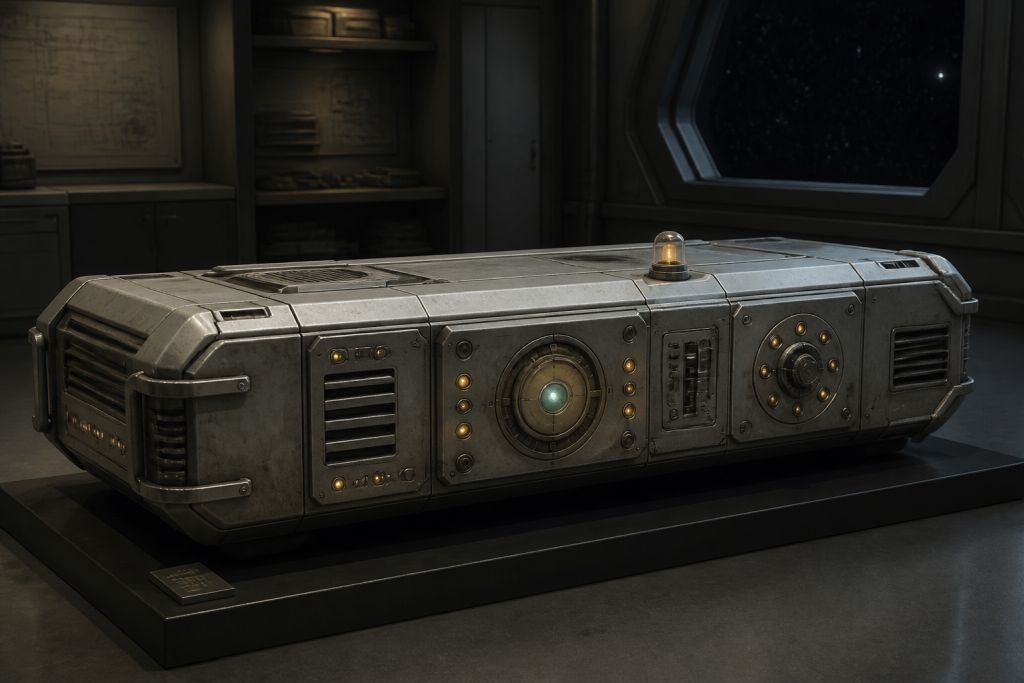
<?xml version="1.0" encoding="utf-8"?>
<feed xmlns="http://www.w3.org/2005/Atom" xmlns:media="http://search.yahoo.com/mrss/">
    <title>Aurora Argentea</title>
    <link href="https://abelaze.de/feed.xml" rel="self" />
    <link href="https://abelaze.de" />
    <updated>2026-08-18T01:05:32+02:00</updated>
    <author>
        <name>Abelaze</name>
    </author>
    <id>https://abelaze.de</id>

    <entry>
        <title>V-Core (ex)</title>
        <author>
            <name>Abelaze</name>
        </author>
        <link href="https://abelaze.de/v-core-3.html"/>
        <id>https://abelaze.de/v-core-3.html</id>

        <updated>2026-08-13T15:09:36+02:00</updated>
            <summary type="html">
                <![CDATA[
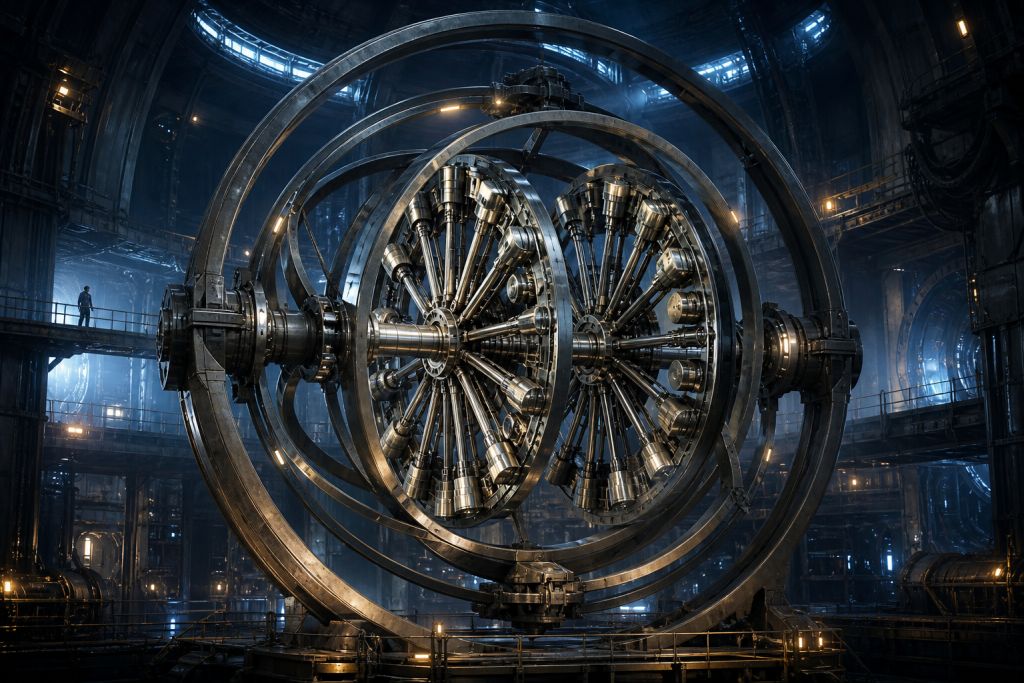
                    Vector Core Propulsion System **V-CORE** repräsentiert eine reaktionsfreie Antriebsarchitektur der nächsten Generation,&hellip;
                ]]>
            </summary>
        <content type="html">
            <![CDATA[
                <!-- Google tag (gtag.js) -->
<p>
<script async="" src="https://www.googletagmanager.com/gtag/js?id=G-KQY6T4WXMT"></script>
<script>
  window.dataLayer = window.dataLayer || [];
  function gtag(){dataLayer.push(arguments);}
  gtag('js', new Date());

  gtag('config', 'G-KQY6T4WXMT');
</script>
</p>
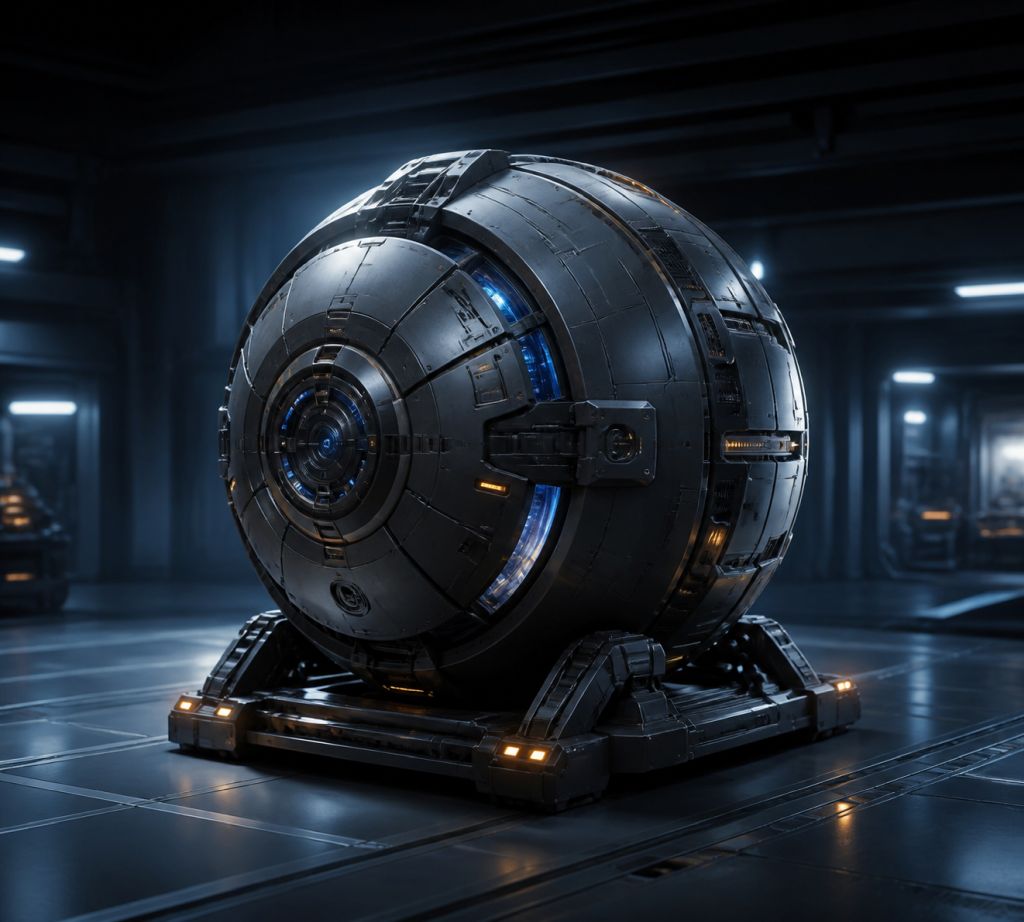
<figure class="post__image post__image--center">Vector Core Propulsion System<br><img  src="https://abelaze.de/media/posts/15/kompakter-kreiselantrieb-serienmodul_K1.jpg" alt="" width="1024" height="922"></figure><br>**V-CORE** repräsentiert eine reaktionsfreie Antriebsarchitektur der nächsten Generation, die für die kontinuierliche Erzeugung, Modulation und Vektorisierung anhaltender translatorischer Beschleunigung innerhalb interplanetarer und tiefraumtauglicher Einsatzprofile entwickelt wurde.<br><br>Im elektromechanischen und felddynamischen Zentrum des Systems werden phasenversetzte inertiale Massenelemente innerhalb eines hochgradig regulierten Vektor-Kohärenzgitters durch präzise synchronisierte hochfrequente Bewegungssequenzen geführt. Diese oszillatorischen Übergänge der Massenzustände werden dabei nicht als konventionelle Reaktionselemente genutzt; vielmehr werden ihre relativen Phasenbeziehungen fortlaufend manipuliert, um innerhalb des lokalen inertialen Kopplungstensors eine kontrollierte Asymmetrie zu erzeugen.<br><br>Durch diesen Prozess etabliert V-CORE einen makroskopisch gerichteten Beschleunigungsgradienten, ohne auf konventionellen Treibstoffverbrauch, den Ausstoß externer Reaktionsmasse oder eine kontinuierliche Impulsübertragung auf einen Abgasstrom angewiesen zu sein*. Das daraus resultierende Vektorkopplungsregime wandelt intern kontrollierte Phasendifferenzen effektiv in eine persistente translatorische Vorzugsrichtung entlang einer definierten Antriebsachse um.<br><br>Echtzeit-Feldprozessoren regulieren kontinuierlich Phasenversatz, inertiale Synchronisation, Kopplungsamplitude, Vektororientierung sowie strukturelle Kompensationsparameter innerhalb der aktiven Kernanordnung. Dadurch kann das Antriebsfeld während des Betriebs dynamisch umgeformt werden und ermöglicht nahtlose Übergänge zwischen Hauptbeschleunigung, Verzögerung, Trajektorienverfeinerung, Positionshaltung und hochpräzisen Lageregelungsprofilen, ohne dass hierfür mechanisch voneinander unabhängige Schubsysteme erforderlich wären.<br><br>Abhängig von installierter Kerngeometrie, Massenverteilung des Raumfahrzeugs, verfügbarer Energiearchitektur und zertifizierten strukturellen Belastungsgrenzen sind V-CORE-Antriebseinheiten in der Lage, über ausgedehnte Betriebszeiträume kontinuierliche Beschleunigungsniveaus von bis zu **1,5 G** aufrechtzuerhalten.<br><br>Eine derart anhaltende Beschleunigung verändert die konventionelle Architektur interplanetarer Missionen grundlegend. Anstatt sich auf kurze, hochenergetische Beschleunigungsmanöver mit anschließenden langen ballistischen Freiflugphasen zu stützen, können mit V-CORE ausgestattete Raumfahrzeuge über wesentliche Abschnitte ihres Transitprofils eine kontrollierte Beschleunigung beibehalten und diese während der terminalen Annäherungsphase durch eine entsprechende Verzögerung kompensieren.<br><br>Die daraus resultierenden operationellen Vorteile umfassen drastisch verkürzte Transitzeiten, außergewöhnlich präzise Trajektorienkontrolle, kontinuierliche Kurskorrekturen in Echtzeit, eine reduzierte Abhängigkeit von engen orbitalen Transferfenstern sowie die Etablierung einer dauerhaft vorhandenen Beschleunigungsumgebung an Bord, die insbesondere für bemannte Langzeitmissionen geeignet ist.<br><figure class="post__image post__image--center"><img  src="https://abelaze.de/media/posts/15/kreiselantrieb-koaxiales-doppelrad_K1.jpg" alt="" width="1024" height="683"></figure><br>Bei bemannten Raumfahrzeugen kann das Antriebssystem zusätzlich in die strukturelle Referenzarchitektur des Schiffs integriert werden, sodass der primäre Beschleunigungsvektor gleichzeitig als künstliche gravitative Referenz fungiert. Unter nominalen Reisebedingungen können Wohnbereiche, Arbeitsdecks, Fluidsysteme und interne Logistikinfrastrukturen daher um ein stabiles und kontinuierlich aufrechterhaltenes Beschleunigungsfeld herum konstruiert werden, anstatt auf intermittierende Schubphasen oder rotierende Schwerkraftsysteme angewiesen zu sein.<br><br>V-CORE treibt das Raumfahrzeug nicht lediglich an.<br><br>Es erzeugt eine kontinuierlich kontrollierbare inertiale Referenzumgebung, um die herum das Raumfahrzeug selbst konstruiert werden kann.<br><br>**V-CORE — Vektorisierte Beschleunigung ohne Abhängigkeit von Reaktionsmasse.**</p>
            ]]>
        </content>
    </entry>
    <entry>
        <title>V-Core (exE)</title>
        <author>
            <name>Abelaze</name>
        </author>
        <link href="https://abelaze.de/v-core-exe.html"/>
        <id>https://abelaze.de/v-core-exe.html</id>

        <updated>2026-08-13T15:07:47+02:00</updated>
            <summary type="html">
                <![CDATA[
                    V-CORE represents a next-generation reactionless propulsion architecture engineered for the sustained generation,&hellip;
                ]]>
            </summary>
        <content type="html">
            <![CDATA[
                <!-- Google tag (gtag.js) -->
<p>
<script async="" src="https://www.googletagmanager.com/gtag/js?id=G-KQY6T4WXMT"></script>
<script>
  window.dataLayer = window.dataLayer || [];
  function gtag(){dataLayer.push(arguments);}
  gtag('js', new Date());

  gtag('config', 'G-KQY6T4WXMT');
</script>
</p>
<h1>Vector Core Propulsion System</h1>
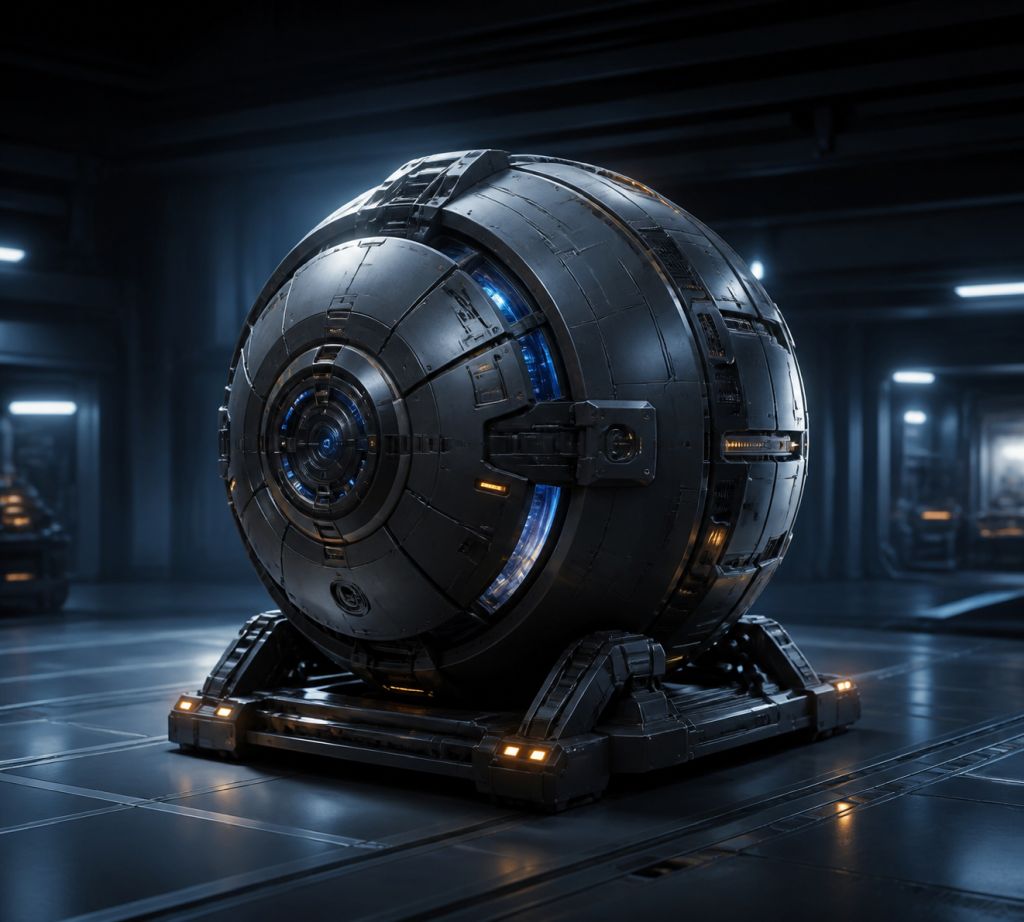
<p><strong>V-CORE</strong> represents a next-generation reactionless propulsion architecture engineered for the sustained generation, modulation, and vectorization of continuous translational acceleration across interplanetary and deep-space operational regimes.</p>
<figure class="post__image post__image--center"><img  src="https://abelaze.de/media/posts/14/kompakter-kreiselantrieb-serienmodul_K1.jpg" alt="" width="1024" height="922"></figure>
<p>At the electromechanical and field-dynamic center of the system, phase-displaced inertial mass elements are driven through precisely synchronized, high-frequency motion sequences within a tightly regulated vector-coherence lattice. These oscillatory mass-state transitions are not utilized as conventional reaction elements; rather, their relative phase relationships are continuously manipulated in order to generate a controlled asymmetry within the local inertial coupling tensor.</p>
<p>Through this process, V-CORE establishes a macroscopically directed acceleration gradient without dependence upon conventional propellant expenditure, external reaction-mass ejection, or sustained momentum transfer to an exhaust stream*. The resulting vector-coupling regime effectively converts internally managed phase differentials into a persistent translational bias along a defined propulsion axis.</p>
<p>Real-time field processors continuously regulate phase offset, inertial synchronization, coupling amplitude, vector orientation, and structural compensation parameters across the active core assembly. This permits the propulsion field to be dynamically reshaped during operation, allowing seamless transition between primary acceleration, deceleration, trajectory refinement, station-keeping, and high-precision attitude-correction profiles without requiring mechanically independent thrust systems.</p>
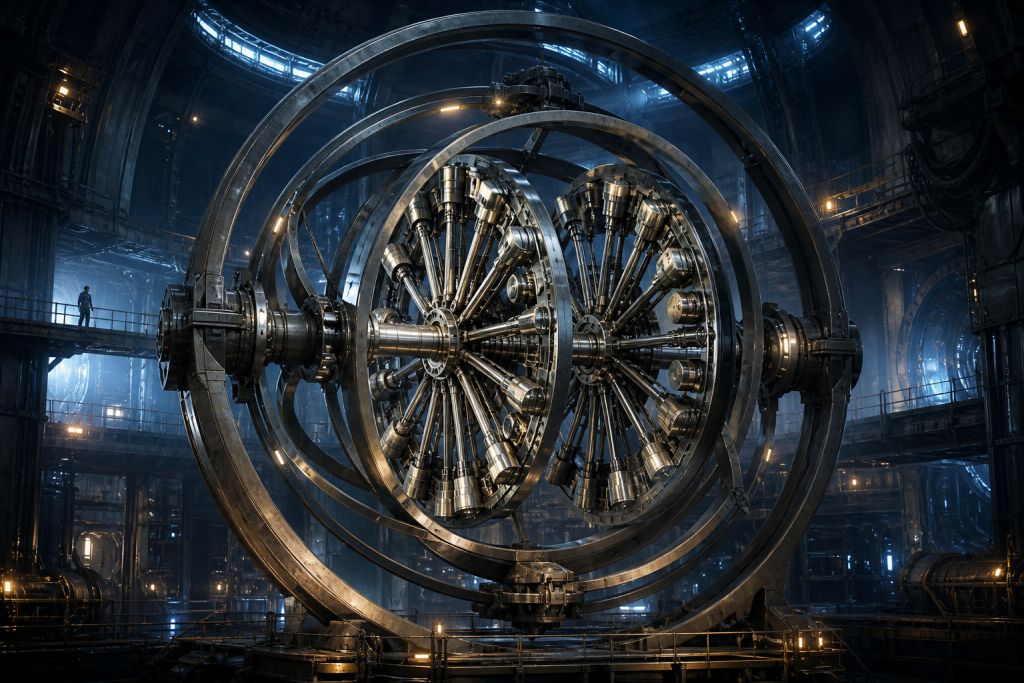
<p>Depending upon installed core geometry, vessel mass distribution, available power architecture, and certified structural tolerances, V-CORE propulsion assemblies are capable of maintaining continuous acceleration levels of up to <strong>1.5 G</strong> for extended operational periods.</p>
<p>Such sustained acceleration fundamentally alters conventional interplanetary mission architecture. Rather than relying upon brief high-energy burns followed by prolonged ballistic coast phases, V-CORE-equipped spacecraft may maintain controlled acceleration through substantial portions of the transit profile, followed by corresponding deceleration during terminal approach.</p>
<p>The resulting operational advantages include dramatically reduced transit durations, exceptionally fine trajectory control, continuous real-time course correction, reduced dependence upon narrow orbital transfer windows, and the establishment of a persistent onboard acceleration environment suitable for crewed long-duration operations.</p>
<figure class="post__image post__image--center"><img  src="https://abelaze.de/media/posts/14/kreiselantrieb-koaxiales-doppelrad_K1.jpg" alt="" width="1024" height="683"></figure>
<p>For crewed vessels, the propulsion system may additionally be integrated with the spacecraft's structural reference architecture so that the primary acceleration vector simultaneously functions as an artificial gravitational reference. Under nominal cruise conditions, habitation decks, workspaces, fluid systems, and internal logistics infrastructure may therefore be designed around a stable and continuously maintained acceleration field rather than intermittent thrust conditions or rotational gravity assemblies.</p>
<p>V-CORE does not merely propel the spacecraft.</p>
<p>It establishes a continuously controllable inertial reference environment around which the spacecraft itself may be designed.</p>
<p><strong>V-CORE — Vectorized Acceleration Without Reaction-Mass Dependency.</strong></p>
<p> </p>
<p> </p>
<p> </p>
            ]]>
        </content>
    </entry>
    <entry>
        <title>Miracle Module (e)</title>
        <author>
            <name>Abelaze</name>
        </author>
        <link href="https://abelaze.de/miracle-module-e.html"/>
        <id>https://abelaze.de/miracle-module-e.html</id>

        <updated>2026-08-13T15:06:44+02:00</updated>
            <summary type="html">
                <![CDATA[
                    When a system needs to command attention—without necessarily inviting questions, or precisely&hellip;
                ]]>
            </summary>
        <content type="html">
            <![CDATA[
                <p> </p>
<p>When a system needs to command attention—without necessarily inviting questions, or precisely because questions are expected.</p>
<figure class="post__image post__image--center"><img  src="https://abelaze.de/media/posts/13/mysterioeses-bordmodul-prototyp_K1.jpg" alt="" width="1024" height="683"></figure>
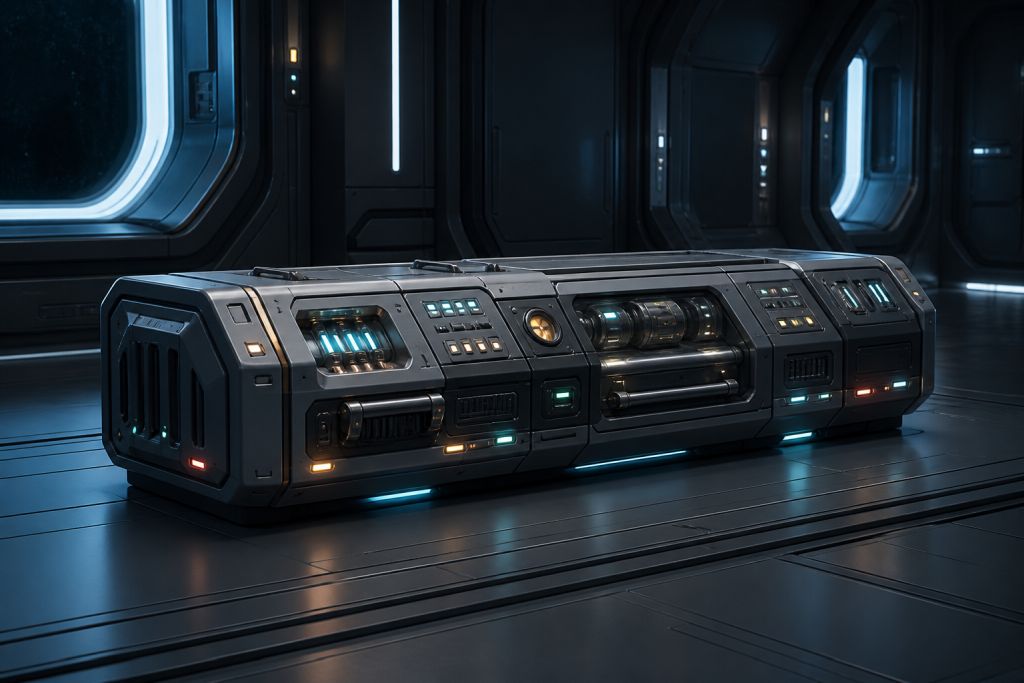
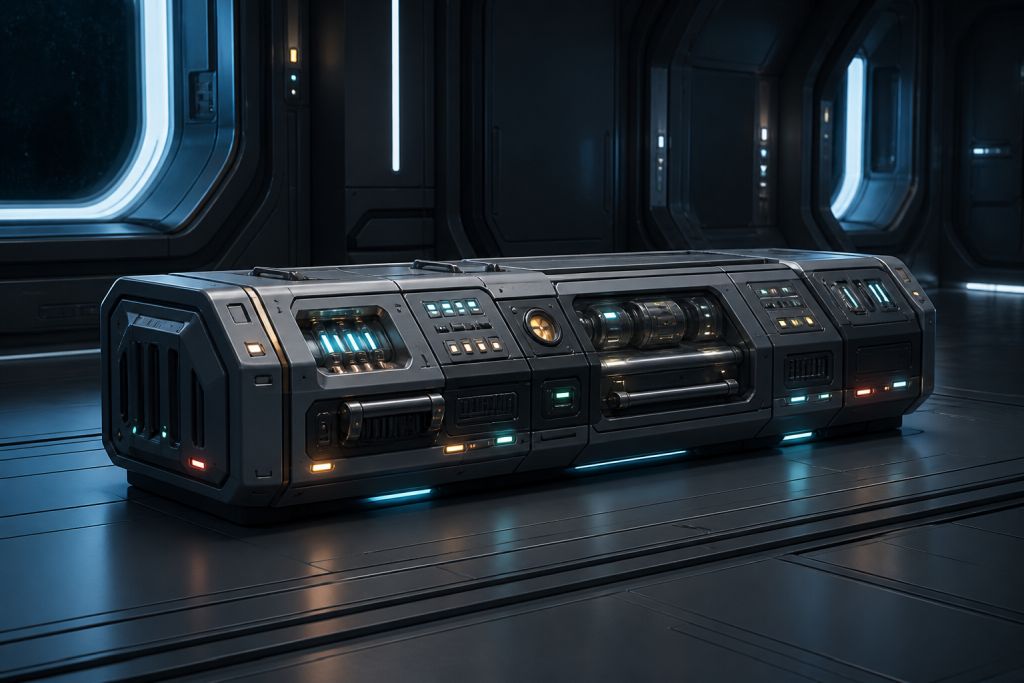
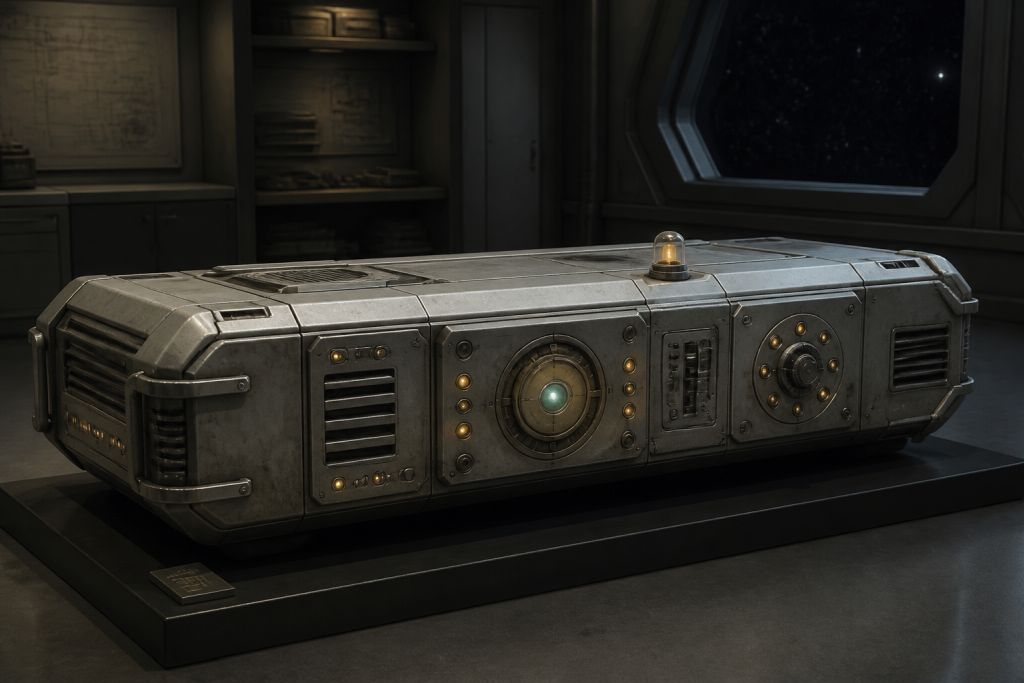
<p>The **Miracle Module** is a universally adaptable onboard systems module developed for operational environments in which a technical installation must remain visibly present and convincingly system-relevant, while its actual functional purpose is intentionally prevented from becoming the primary focus of observation. It communicates technological significance, architectural integration, and a credible degree of engineering complexity without providing unnecessary visual or contextual access to security-sensitive areas of the vessel. Whether employed as an apparent systems interface, as the externally accessible shielding enclosure of an internally located subsystem, or as a technically persuasive addition to an experimental or prototype environment, the Miracle Module establishes an immediate and unambiguous visual reference point.<br><br>Every Miracle Module is individually configured as a singular installation. Enclosure geometry, instrumentation displays, control surfaces, interface elements, and external detailing are adapted specifically to the technological and architectural environment in which the unit is to be deployed. The result is a professionally integrated systems component whose visual complexity naturally attracts and retains observational attention while simultaneously redirecting scrutiny away from confidential, restricted, or otherwise sensitive areas of the installation. **Miracle Module — Visibly Essential. Discreetly Effective.**<br><br>Shown here is an earlier-generation module previously deployed as part of a science-fiction motion-picture set environment.</p>
<figure class="post__image post__image--center"><img  src="https://abelaze.de/media/posts/13/historisches-bordmodul-artefakt_K1.jpg" alt="" width="1024" height="683"></figure>
<!-- Google tag (gtag.js) -->
<script async="" src="https://www.googletagmanager.com/gtag/js?id=G-KQY6T4WXMT"></script>
<script>
  window.dataLayer = window.dataLayer || [];
  function gtag(){dataLayer.push(arguments);}
  gtag('js', new Date());

  gtag('config', 'G-KQY6T4WXMT');
</script>
            ]]>
        </content>
    </entry>
    <entry>
        <title>MatterAnchor (e)</title>
        <author>
            <name>Abelaze</name>
        </author>
        <link href="https://abelaze.de/matteranchor-2.html"/>
        <id>https://abelaze.de/matteranchor-2.html</id>

        <updated>2026-08-13T15:01:09+02:00</updated>
            <summary type="html">
                <![CDATA[
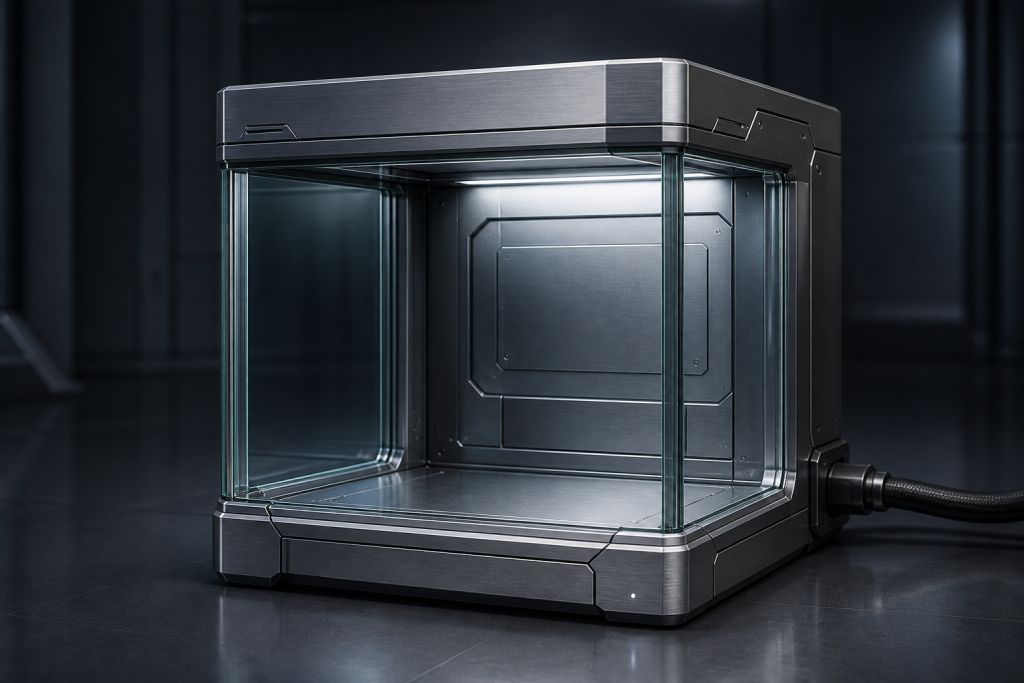
                    The Transporter Phase-Locking Architecture for High-Value Assets, Evidentiary Materials, and Security-Critical Components.
                ]]>
            </summary>
        <content type="html">
            <![CDATA[
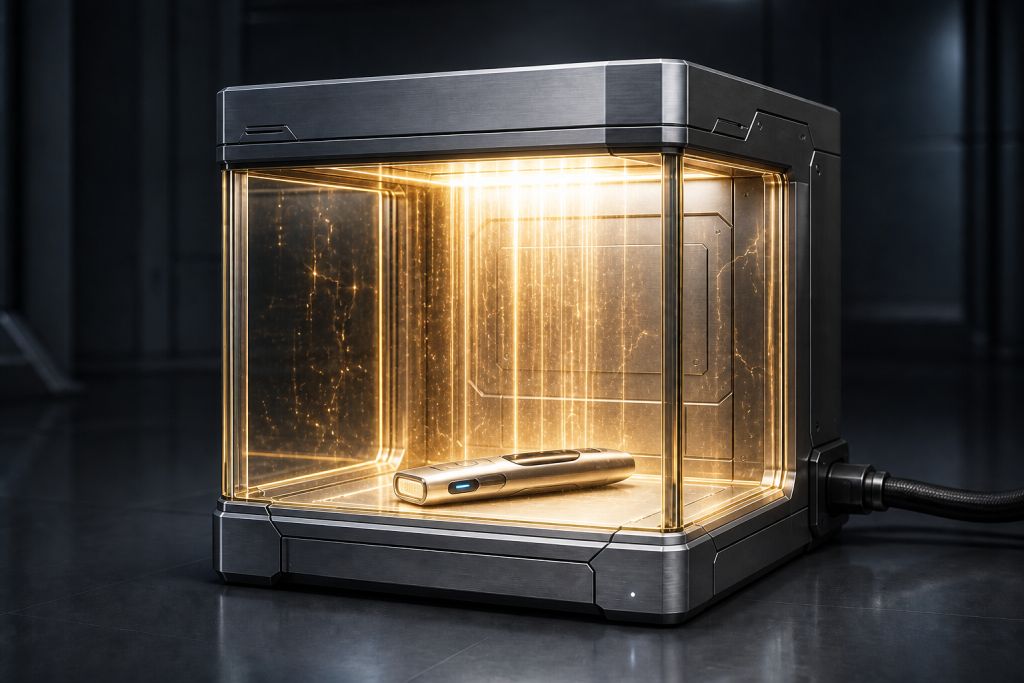
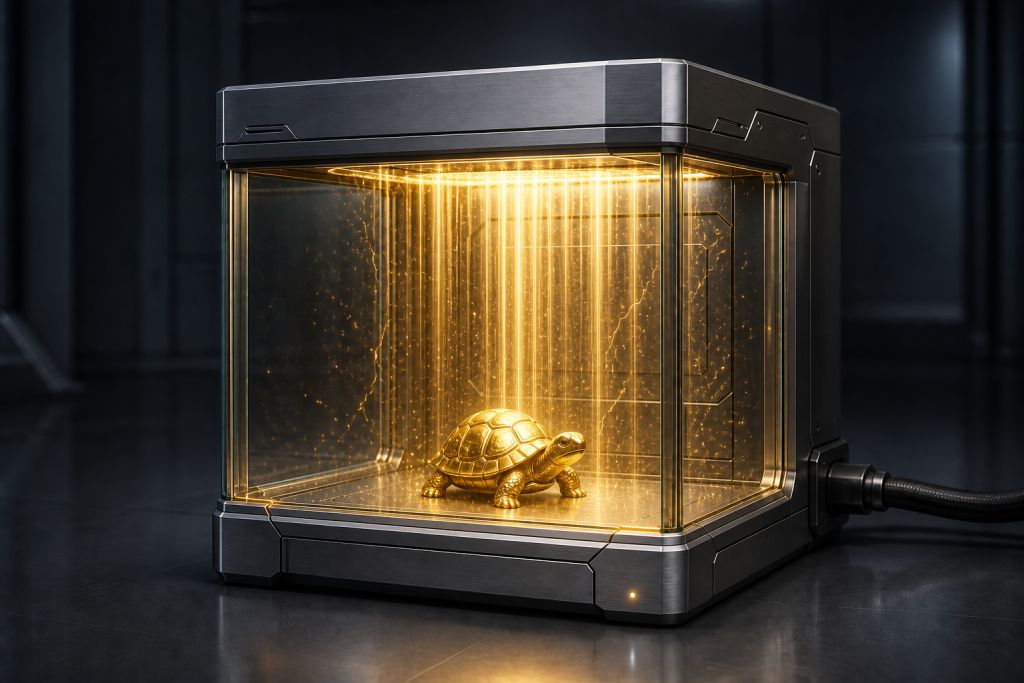
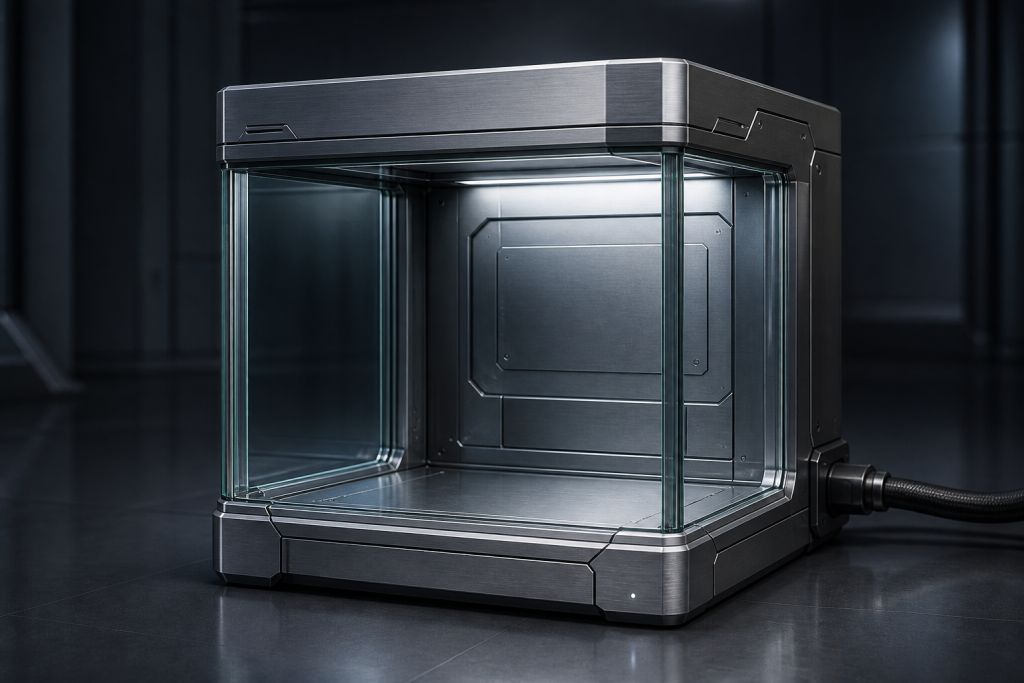
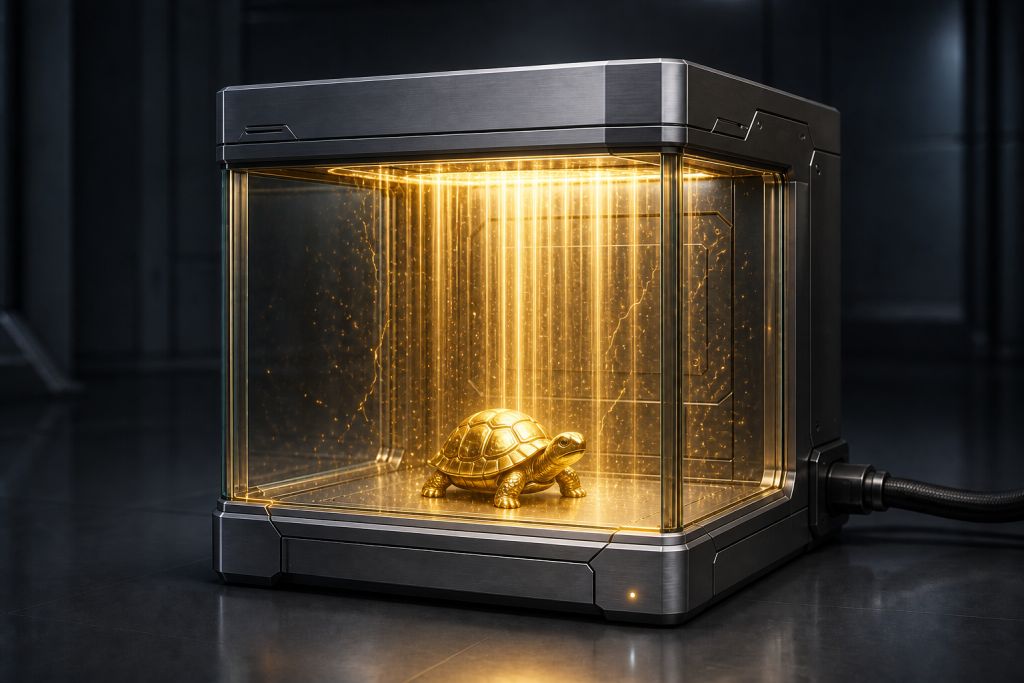
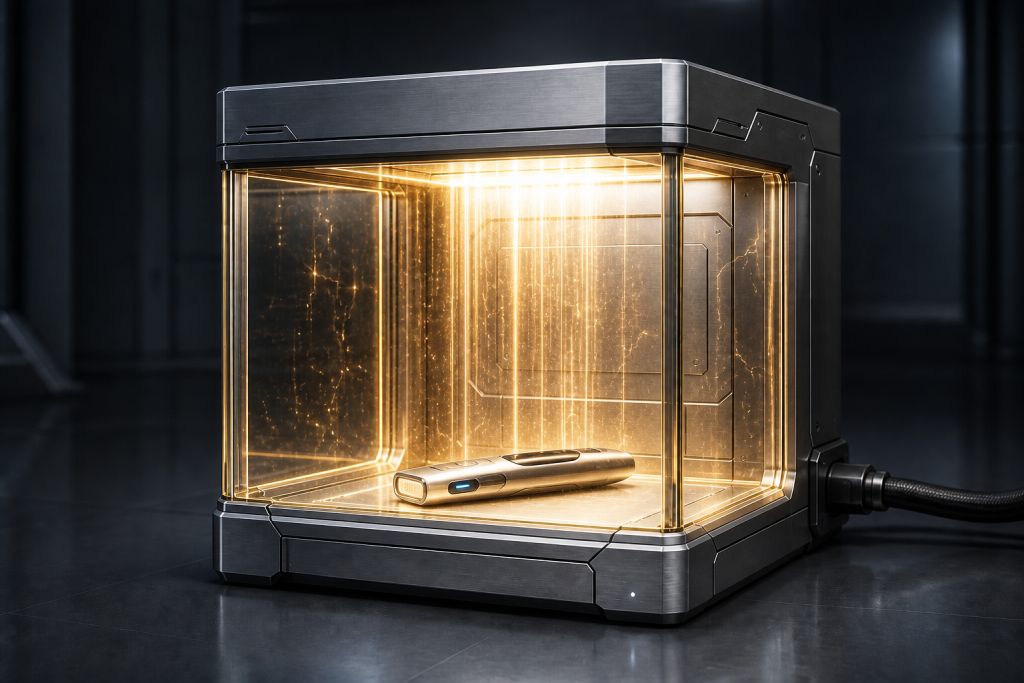
                <figure class="post__image post__image--center">The Transporter Phase-Locking Architecture for High-Value Assets, Evidentiary Materials, and Security-Critical Components.<br><img  src="https://abelaze.de/media/posts/11/matteranchor-inaktive-behandlungskammer_K1.jpg" alt="" width="1024" height="683"></figure><br>MatterAnchor operates through the controlled superposition of a phase-variable coherence bath and a tachyon-damped signature-convolution matrix. Within the containment chamber, distributed vector spindles generate a pseudoacoustic field topology that induces a deliberately engineered transfer-state dissonance within the treated material's matter signature. In more operationally accessible terminology: the transporter remains perfectly capable of detecting, resolving, and identifying the object, yet becomes physically incapable of incorporating it into a stable matter-transfer sequence.<br><figure class="post__image post__image--center"><img  src="https://abelaze.de/media/posts/11/matteranchor-aktiv-chrom-instrument_K1.jpg" alt="" width="1024" height="683"></figure><br>MatterAnchor is designed exclusively for application to nonliving material objects. Living organisms possess an intrinsically dynamic state of endogenous coherence whose persistence depends upon the uninterrupted interaction of biochemical, electromagnetic, structural, and quantum-statistical processes. Under MatterAnchor conditions, this coherence would not be stabilized; rather, it would undergo irreversible phase decoupling. In an inanimate object, the relevant transport property may be approximated as a comparatively persistent signature. In a living system, however, that apparent signature is inseparable from a continuously evolving process—and destabilization of that process would result in comprehensive systemic collapse. As an intentionally simplified analogy, the effect may be imagined as analogous to biological material situated within the active volume of a microwave cavity, although the actual mechanism would operate at a substantially more fundamental level and with correspondingly more catastrophic consequences. For this reason, the application of MatterAnchor technology to any living organism is categorically prohibited.<br><figure class="post__image post__image--center"><img  src="https://abelaze.de/media/posts/11/matteranchor-aktiv-goldene-schildkroete_K1.jpg" alt="" width="1024" height="683"></figure><br>Operational behavior may be configured with considerable granularity through the transporter beam-control console, provided that the proprietary MA auxiliary interface is installed. In the standard autonomous configuration, without console-level integration, the presence of MatterAnchor-treated material anywhere within the resolved transport envelope causes the entire beam attempt to abort prior to successful matter transfer. Installation of the MA supplementary control module enables a considerably broader range of response architectures. One available configuration, for example, permits an individual carrying a protected object to be transported into a predefined security-containment area while automatically excluding the treated object from the transfer matrix. The protected object consequently remains at its original spatial coordinates and, where applicable, subsequently undergoes ordinary local gravitational descent. This configuration permits MatterAnchor to function simultaneously as a transporter-resistant anti-theft system and as an automated mechanism for the interception and detention of an individual attempting the unauthorized removal of protected material.</p>
<p> </p>
<!-- Google tag (gtag.js) -->
<p>
<script async="" src="https://www.googletagmanager.com/gtag/js?id=G-KQY6T4WXMT"></script>
<script>
  window.dataLayer = window.dataLayer || [];
  function gtag(){dataLayer.push(arguments);}
  gtag('js', new Date());

  gtag('config', 'G-KQY6T4WXMT');
</script>
</p>
            ]]>
        </content>
    </entry>
    <entry>
        <title>AURIS (e)</title>
        <author>
            <name>Abelaze</name>
        </author>
        <link href="https://abelaze.de/auris-e.html"/>
        <id>https://abelaze.de/auris-e.html</id>

        <updated>2026-08-13T14:57:17+02:00</updated>
            <summary type="html">
                <![CDATA[
                    Acoustic Perception System The Vacuum Is Silent. Your Operational Environment Is Not.
                ]]>
            </summary>
        <content type="html">
            <![CDATA[
                <h1>Acoustic Perception System</h1>
<figure class="post__image post__image--center"><img  src="https://abelaze.de/media/posts/10/auris-kollisionswarnung-cockpit_K1.jpg" alt="" width="1024" height="683"></figure>
<h2>The Vacuum Is Silent. Your Operational Environment Is Not.</h2>
<p>A recurrent criticism directed at prominent cinematic representations of spaceflight—particularly within the science-fiction genre—is the physically inaccurate depiction of acoustic propagation through interplanetary or interstellar vacuum. In the absence of a sufficiently dense material transmission medium, conventional pressure-wave propagation is, of course, impossible; consequently, an actual engagement between spacecraft would not acoustically resemble the spectacularly thunderous events traditionally presented by audiovisual entertainment media. Such representations deliberately suspend elementary physical constraints in order to increase dramatic intelligibility and maintain perceptual engagement—an especially conspicuous compromise in a genre whose technological premises frequently invite heightened scrutiny with respect to scientific plausibility.</p>
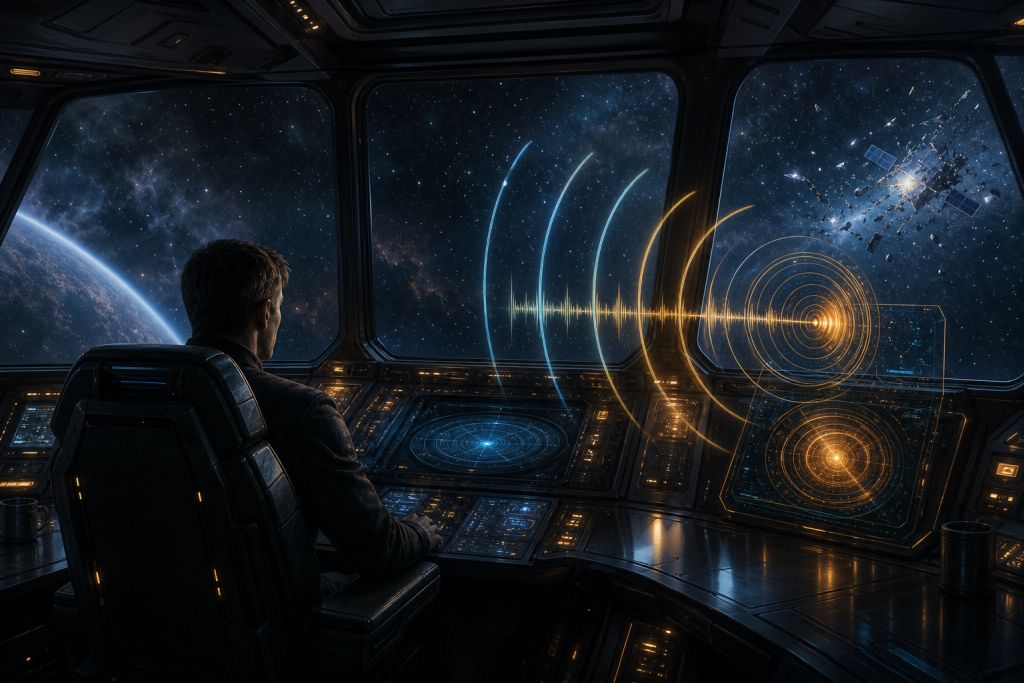
<p>The <strong>AURIS Acoustic Perception System</strong>, however, demonstrates that the absence of naturally propagating sound does not necessitate the absence of an acoustically intelligible environment.</p>
<p>AURIS has been in operational deployment for a sufficiently extended period that comparable principles of synthetic acoustic environmental representation may reasonably be assumed to have emerged independently in other technological contexts, civilizations, or historical epochs throughout the observable universe. The underlying rationale is straightforward: not only an external observer, but also the crew of a spacecraft benefits substantially from receiving complex environmental information through the highly developed spatial, temporal, and pattern-recognition capabilities of the human auditory system.</p>
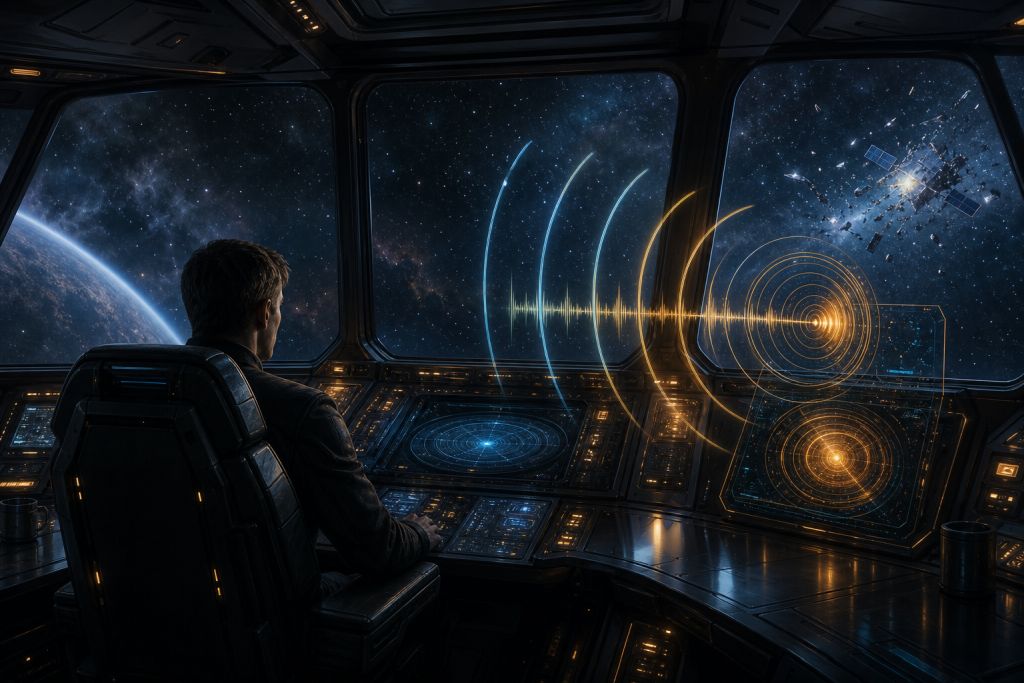
<p>AURIS therefore does <strong>not</strong> attempt to detect sound propagating through vacuum. Instead, it performs a computationally mediated <strong>cross-modal transformation of externally measured physical phenomena into a spatially coherent synthetic acoustic representation</strong>.</p>
<p>The system integrates heterogeneous sensor information obtained from optical acquisition systems, active and passive radar, lidar assemblies, electromagnetic and field-sensitive instrumentation, and additional mission-specific sensor architectures. These independently acquired data streams are subjected to real-time multisensor fusion, probabilistic correlation, trajectory reconstruction, and comparison against an extensive database of known physical and technological signatures.</p>
<p>From this composite environmental model, AURIS synthesizes a dynamically updated three-dimensional auditory representation of the surrounding operational volume.</p>
<p>An external object therefore becomes acoustically perceptible not because a physical sound wave has traversed the intervening vacuum, but because its measurable signatures have been computationally translated into a predefined—or adaptively generated—<strong>acoustic signature profile</strong>. The resulting perceptual representation may encode parameters including relative bearing, angular displacement, estimated distance, translational and rotational motion, acceleration, propulsion state, energetic output, relative velocity, and the temporal evolution of the detected object.</p>
<p>In practical terms, the auditory field functions as a perceptual extension of the spacecraft's sensor architecture: directionally localized acoustic events correspond to spatially localized external phenomena, while modifications in spectral composition, amplitude, modulation, harmonic structure, temporal density, and apparent motion communicate changes in the underlying sensor-derived state.</p>
<p>AURIS is not restricted to the acoustic representation of artificial technological signatures.</p>
<p>Naturally occurring astrophysical and heliophysical phenomena may likewise be incorporated into the synthesized perceptual environment, provided that they produce quantifiable effects within the sensitivity range of the spacecraft's instrumentation. Measurements of ionizing radiation, electromagnetic flux, magnetic-field variation, plasma density, energetic particle transport, gravitational perturbation, and other relevant parameters can therefore be mapped onto specifically designed acoustic structures.</p>
<p>Elevated stellar activity, for example, may manifest as a fine, persistent, spectrally modulated crackling texture whose intensity and temporal density correspond to variations in measured particle and radiation flux. Coronal mass ejections, extreme magnetospheric disturbances, supernova-related emissions, or other high-energy astrophysical events may be assigned distinctly identifiable acoustic profiles whose perceptual characteristics evolve in accordance with their measured physical properties.</p>
<p>The result is not an arbitrary collection of cinematic sound effects, but a systematically generated <strong>auditory abstraction of measurable external reality</strong>.</p>
<p>Accordingly, the acoustic environment produced by AURIS encompasses substantially more than spacecraft, propulsion systems, weapons activity, or tactical engagements. It constitutes a continuously synthesized multisensory representation of the entire instrumentally observable environment surrounding the vessel.</p>
<p><strong>The vacuum remains silent. AURIS makes its information audible.</strong></p>
<!-- Google tag (gtag.js) -->
<p>
<script async="" src="https://www.googletagmanager.com/gtag/js?id=G-KQY6T4WXMT"></script>
<script>
  window.dataLayer = window.dataLayer || [];
  function gtag(){dataLayer.push(arguments);}
  gtag('js', new Date());

  gtag('config', 'G-KQY6T4WXMT');
</script>
</p>
            ]]>
        </content>
    </entry>
    <entry>
        <title>Miracle Module</title>
        <author>
            <name>Abelaze</name>
        </author>
        <link href="https://abelaze.de/miracle-module.html"/>
        <id>https://abelaze.de/miracle-module.html</id>
            <category term="Science fiction,star trek, enterprise, star wars, sound in space, sound generator in space, spaceship"/>

        <updated>2026-08-13T00:26:28+02:00</updated>
            <summary type="html">
                <![CDATA[
                    Wenn ein System auffallen muss, ohne oder um Fragen aufzuwerfen. Das Miracle&hellip;
                ]]>
            </summary>
        <content type="html">
            <![CDATA[
                <p>Wenn ein System auffallen muss, ohne oder um Fragen aufzuwerfen. Das Miracle Module ist ein universelles Bordmodul für Situationen, in denen eine technische Installation sichtbar sein muss, ihre Funktion aber nicht im Mittelpunkt stehen soll. Es vermittelt Präsenz, Systemrelevanz und technische Tiefe, ohne unnötige Einblicke in sensible Bereiche Ihres Schiffs zu geben. Ob als Schnittstelle, als äußere Abschirmung eines internen Systems oder als überzeugende Ergänzung einer Prototypenumgebung: Das Miracle Module schafft einen klaren Bezugspunkt.</p>
<figure class="post__image post__image--center"><img  src="https://abelaze.de/media/posts/9/mysterioeses-bordmodul-prototyp_K1.jpg" alt="MM" width="1024" height="683"></figure>
<p>Jedes Miracle Module ist ein Einzelstück. Gehäuse, Anzeigen und Bedienfelder werden passend zur Umgebung konfiguriert. Das Ergebnis ist ein professionell wirkendes Modul, das Aufmerksamkeit bindet und den Blick von vertraulichen Bereichen fernhält. Miracle Module – sichtbar wichtig. Diskret wirkungsvoll.</p>
<p>Hier ein älteres Modul, welches in einer Science-Fiction Filmkulisse eingesetzt wurde.</p>
<figure class="post__image post__image--center"><img  src="https://abelaze.de/media/posts/9/historisches-bordmodul-artefakt_K1.jpg" alt="" width="1024" height="683"></figure>
<!-- Google tag (gtag.js) -->
<p>
<script async="" src="https://www.googletagmanager.com/gtag/js?id=G-KQY6T4WXMT"></script>
<script>
  window.dataLayer = window.dataLayer || [];
  function gtag(){dataLayer.push(arguments);}
  gtag('js', new Date());

  gtag('config', 'G-KQY6T4WXMT');
</script>
</p>
            ]]>
        </content>
    </entry>
    <entry>
        <title>MatterAnchor</title>
        <author>
            <name>Abelaze</name>
        </author>
        <link href="https://abelaze.de/matteranchor.html"/>
        <id>https://abelaze.de/matteranchor.html</id>

        <updated>2026-08-13T00:21:52+02:00</updated>
            <summary type="html">
                <![CDATA[
                    Die Transporter-Phasenverriegelung für Wertgegenstände, Beweismittel und sensible Komponenten. MatterAnchor arbeitet mit einem&hellip;
                ]]>
            </summary>
        <content type="html">
            <![CDATA[
                <p>Die Transporter-Phasenverriegelung für Wertgegenstände, Beweismittel und sensible Komponenten.</p>
<figure class="post__image post__image--center"><img  src="https://abelaze.de/media/posts/8/matteranchor-inaktive-behandlungskammer_K1.jpg" alt="" width="1024" height="683"></figure>
<p>MatterAnchor arbeitet mit einem phasenvariablen Kohärenzbad und einer Tachyon-gedämpften Signaturfaltung. Im Inneren der Kammer erzeugen Vektor-Spindeln ein pseudoakustisches Feld, das die Materiesignatur in eine Transfer-Disonanz kippt. Für Außenstehende heißt das einfach: Der Transporter sieht es, aber er kann es nicht mitnehmen.</p>
<figure class="post__image post__image--center"><img  src="https://abelaze.de/media/posts/8/matteranchor-aktiv-goldene-schildkroete_K1.jpg" alt="" width="1024" height="683"></figure>
<p>MatterAnchor ist ausschließlich für unbelebte Gegenstände vorgesehen. Lebende Organismen besitzen eine hochdynamische Eigenkohärenz – und genau diese würde nicht stabilisiert, sondern irreversibel entkoppelt. Was bei Objekten eine Signatur ist, ist bei Leben ein Prozess – und dieser Prozess würde vollständig zusammenbrechen. Man kann es sich vorstellen wie im Inneren eines Mikrowellengerätes – nur deutlich radikaler. Deshalb ist jede Anwendung an lebenden Wesen strikt ausgeschlossen.</p>
<figure class="post__image post__image--center"><img  src="https://abelaze.de/media/posts/8/matteranchor-aktiv-chrom-instrument_K1.jpg" alt="" width="1024" height="683"></figure>
<p>Die Anwendung lässt sich beliebig an der Beam-Konsole konfigurieren, vorausgesetzt unser MA Zusatzinterface ist vorhanden. Die Standardkonfiguration ohne Konsole lässt einen Beamversuch durch die Anwesenheit behandelten Materials komplett abbrechen. Mit unserem Zusatzmodul sind mehr Varianten möglich, wie zum Beispiel das Beamen der Person <span style="font-size: inherit;">in einen Sicherheitsbereich - </span><span style="font-size: inherit;">ohne den behandelten Gegenstand, der dann allerdings zu Boden fällt. Eine mögliche Diebstahlsicherung mit gleichzeitiger Festsetzung des Diebes.</span></p>
<!-- Google tag (gtag.js) -->
<p>
<script async="" src="https://www.googletagmanager.com/gtag/js?id=G-KQY6T4WXMT"></script>
<script>
  window.dataLayer = window.dataLayer || [];
  function gtag(){dataLayer.push(arguments);}
  gtag('js', new Date());

  gtag('config', 'G-KQY6T4WXMT');
</script>
</p>
            ]]>
        </content>
    </entry>
    <entry>
        <title>AURIS</title>
        <author>
            <name>Abelaze</name>
        </author>
        <link href="https://abelaze.de/auris-2.html"/>
        <id>https://abelaze.de/auris-2.html</id>

        <updated>2026-08-12T00:10:14+02:00</updated>
            <summary type="html">
                <![CDATA[
                    Acoustic Perception System. Das Vakuum ist still. Ihre Umgebung nicht. Immer wieder&hellip;
                ]]>
            </summary>
        <content type="html">
            <![CDATA[
                <figure class="post__image post__image--wide"><img  src="https://abelaze.de/media/posts/5/auris-kollisionswarnung-cockpit_K1.jpg" alt="au" width="1024" height="683"></figure>
<p>Acoustic Perception System. Das Vakuum ist still. Ihre Umgebung nicht.</p>
<p>Immer wieder wird über bekannte Kinoproduktionen im Science Fiction Bereich gelästert, dass Klang im All nicht existiere und eine Raumschlacht vollkommen stumm ablaufen würde. Nur um die Zuschauer bei Laune zu halten und mehr Dramatik ins Geschehen zu bringen werden Naturgesetze gebrochen, die gerade in diesem Genre erhöhter Aufmerksamkeit bedürfen. Nun ist unser AURIS System schon sehr lange am Markt und man kann davon ausgehen, dass es ein ähnliches System bereits in anderen Bereichen und Zeiten unseres Weltalls gegeben hat. Denn nicht nur der Zuschauer, sondern auch die Besatzung eines Raumschiffes wollen nicht auf die akustische Erfahrung der Ereignisse verzichten.</p>
<p>Wir übersetzen Ereignisse außerhalb des Schiffs in ein räumliches Klangbild – damit Sie schneller erfassen, was um Sie geschieht.<br>AURIS ist ein multisensorisches Umgebungswahrnehmungssystem für bemannte Raumfahrzeuge. Es führt Daten aus optischer Erfassung, Radar-, Lidar- und Feldsensorik zusammen und gleicht sie mit einer Signaturdatenbank ab. Daraus berechnet AURIS eine räumlich korrekte akustische Darstellung für die Besatzung. Ein Objekt wird nicht hörbar, weil Schall das Vakuum durchquert, sondern weil seine Signaturen in ein definiertes Klangprofil übersetzt werden – einschließlich Entfernung, Richtung, Schubzustand und Relativbewegung.<br>AURIS verarbeitet nicht ausschließlich technische Signaturen. Auch natürliche Phänomene werden anhand ihrer Messwerte akustisch abgebildet – etwa Strahlungsintensität, magnetische Aktivität oder Teilchenströme. Hohe Sternaktivität kann beispielsweise als feines, kontinuierliches Knistern erscheinen; Supernovae oder koronale Ausbrüche erhalten klar zuordenbare Klangprofile. So umfasst die akustische Darstellung nicht nur Raumfahrzeuge oder Gefechtssituationen, sondern die gesamte messbare Umgebung.</p>
<!-- Google tag (gtag.js) -->
<script async="" src="https://www.googletagmanager.com/gtag/js?id=G-KQY6T4WXMT"></script>
<script>
  window.dataLayer = window.dataLayer || [];
  function gtag(){dataLayer.push(arguments);}
  gtag('js', new Date());

  gtag('config', 'G-KQY6T4WXMT');
</script>
            ]]>
        </content>
    </entry>
</feed>